A thoughtfully chosen sconce does more than brighten a wall—it sculpts the feeling of a room. From softly washing a hallway in warmth to highlighting architectural details or framing a bathroom mirror, these compact wall fixtures bring layered light where ceilings can’t and table lamps shouldn’t. The best sconces balance form and function: they look beautiful in daylight and deliver practical illumination by night. With options that range from classic candle silhouettes to industrial, hand-spun steel shades, there is a style and specification for every home, restaurant, and retail space. Whether updating a city apartment or outfitting a cozy farmhouse porch, understanding how a sconce works—and how to pick the right one—makes all the difference in comfort, safety, and style.
Today’s market spans plug-in convenience for renters, hardwired choices for long-term upgrades, and outdoor-rated models designed to weather seasons. Quality construction, timeless finishes, and thoughtful installation ensure that a sconce isn’t just décor—it’s a lasting piece of everyday utility. Consider this your guide to sizing, placement, materials, and maintenance, complete with practical scenarios to help you light like a pro.
What Is a Sconce? Form, Function, and the Art of Wall Lighting
A sconce is a wall-mounted light fixture that directs illumination where it’s needed most—at eye level. Historically, sconces held candles and torches; today, they hold bulbs, glass, and metal shades that shape and diffuse light. Unlike overhead fixtures, sconces anchor light close to surfaces, producing flattering shadows, gentle highlights, and a more intimate atmosphere. They can uplight to emphasize height and texture, downlight for task clarity, or provide all-around glow for ambient balance. This “side lighting” can make a narrow hallway feel wider, a stairwell safer, and a bedroom more peaceful by removing glare from overhead sources.
Common sconce types include candle-style fixtures for classic spaces, dome or cone shades for industrial appeal, swing-arm designs for flexible bedside reading, and cylinder or opal glass for a soft, modern look. Depending on the design, the beam pattern may be focused or diffuse; reading sconces often benefit from a directed beam, while living rooms favor a broader wash. For bathrooms, flanking a mirror with two sconces at roughly eye height helps minimize shadows on the face, improving makeup application and shaving precision.
Choosing between hardwired and plug-in sconces depends on permanence and wiring access. Hardwired units give a clean, cord-free presentation and can be dimmer-controlled from the wall, ideal for renovations and new builds. Plug-in models simplify life in rentals or when rewiring isn’t desirable—many include inline switches and fabric cords that blend with décor. For energy efficiency, LED bulbs with warm color temperatures (2700K–3000K) create cozy, welcoming light, while higher temperatures (3500K–4000K) can be crisp and functional for work areas. Dimmers offer crucial control: dim low for movie night, raise for reading, and fine-tune brightness throughout the day.
Design-wise, the finish and profile should echo the surrounding materials—matte black against painted brick, galvanized steel on a farmhouse porch, or warm brass in a mid-century hallway. A well-chosen wall light can become a subtle statement piece, complementing furniture lines and architectural features without overpowering them. The most successful installations treat sconces as part of a layered lighting plan, working alongside ceiling fixtures and floor or table lamps to create depth and flexibility.
Choosing the Right Sconce for Every Room and Exterior
The ideal wall sconce depends on placement, proportion, and purpose. Start with height: in most hallways and living spaces, the center of the sconce lands around 60–66 inches from the floor so light sits near eye level. In long corridors, space fixtures about 6–10 feet apart depending on lumen output, finish reflectivity, and ceiling height. For ADA-sensitive hallways or commercial corridors, select low-profile sconces to maintain safe, code-conscious clearances.
In bathrooms, mount a pair of sconces flanking the mirror with the light source at eye level (roughly 60–65 inches to the center for many adults), positioned 28–36 inches apart depending on mirror width. Look for damp-rated fixtures to handle steam. Frosted or opal glass softens glare, while dimmers accommodate both grooming tasks and spa-like evening routines. In bedrooms, swing-arm styles or compact downlights free up nightstand space and reduce the need for overhead glare; pair with warm bulbs and easy-to-reach switches for comfort.
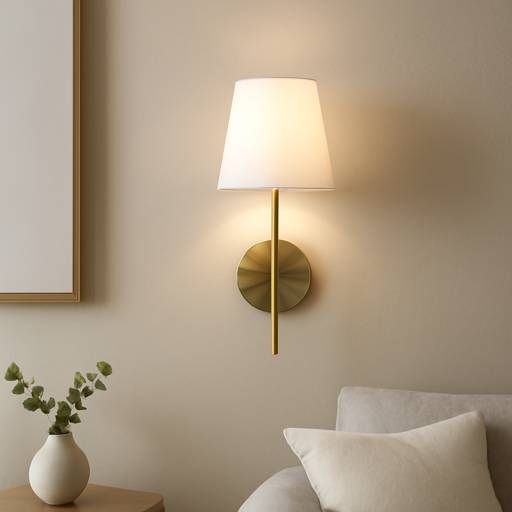
Living rooms and dining areas benefit from adjustable ambiance. Cone or dome shades add sculptural presence while keeping light controlled. Consider how a sconce interacts with artwork: downlights can highlight framed pieces without scorching them in direct beams, while picture lights are specialized for even coverage across canvases. In kitchens, a sturdy metal shade placed near open shelving or over a coffee nook brings task-level brightness with a decorative touch.
Outdoors, choose fixtures rated for damp or wet locations depending on exposure. Porches with overhangs may be fine with damp-rated units, while open walls that face weather demand wet-rated designs and durable finishes. Coastal settings call for corrosion-resistant materials and finishes designed to stand up against salty air. A durable steel sconce with a weather-resistant coating can provide years of service on garage façades, barn doors, or garden walls. Scale matters too: a fixture that’s roughly one-quarter to one-third the height of the door offers pleasing proportions at entries. On double doors or wider garages, flanking lights often feel more balanced than a single centered piece.
Style and finish should either harmonize or intentionally contrast. Industrial black or galvanized steel leans modern-farmhouse and loft; burnished brass or bronze feels classic; crisp white and soft gray keep contemporary interiors airy. If mixing metals, repeat each finish at least twice in a space—cabinet hardware with a matching sconce finish, for instance—to avoid a scattered look. Finally, think in lumens, not watts: LED bulbs around 450–800 lumens per sconce suit ambient needs, while 800–1100 lumens help with tasks or tall ceilings. Match color temperature to room mood: warmer for bedrooms and living areas, slightly cooler for work zones.
Materials, Craft, and Installation Tips that Make Sconces Last
Some sconces are built to last a season; others, a lifetime. Look for quality materials—heavy-gauge steel shades, robust mounting plates, and precision-spun or formed metal work that resists dents and warping. Powder-coated finishes offer durability and color depth while protecting against chipping and UV fade. Galvanized options introduce a rugged, salt-air-friendly layer for coastal installations. If glass is part of the design, consider thickness and diffusion: opal glass softens and spreads light, while clear glass shows off decorative filament bulbs but can create glare without dimming.
Old-fashioned craftsmanship still matters. Fixtures that are formed, finished, and assembled by skilled hands tend to hold up through décor trends and day-to-day bumps. Threaded connections should feel smooth and snug; backplates should sit flush; and the canopy should cover the junction box cleanly. Common sockets include E26 for standard bulbs and E12 for candelabra styles. Integrated LEDs offer sleek profiles and efficiency, but replaceable-bulb designs provide future flexibility. Either way, check the rating for indoor, damp, or wet locations, and confirm compatibility with your preferred dimmer and bulb type.
Installation starts with a solid foundation. Mount to a properly supported junction box to carry the fixture’s weight, especially with larger steel shades or arm extensions. If the wall lacks a box where needed, consult a licensed electrician to route power and meet local code. For plug-in models, use cord guides or neatly placed clips to keep lines tidy and safe from pinch points. On exteriors, apply a thin bead of clear, paintable sealant around the top half of the backplate to shed water while allowing moisture to escape from the bottom. Always turn off power at the breaker before any work and test using a non-contact voltage tester.
Maintenance is simple but meaningful. Wipe metal shades with a soft, damp cloth; avoid abrasive cleaners that can dull finishes. For outdoor fixtures, occasional rinsing to remove salt or dust preserves luster. Replace bulbs with the correct wattage equivalent, noting lumen output and color temperature to maintain the lighting mood you intended. If dimming performance flickers, verify bulb-dimmer compatibility—many modern LED bulbs list recommended controls.
Real-world scenarios help bring it together. In a compact apartment hallway, two low-profile sconces set to warm 2700K along a 10-foot run soften shadows and make the passage feel expansive without crowding the space. In a neighborhood café, a row of matte-black steel downlights mounted along a paneled wall creates intimate tables while minimizing ceiling clutter; paired with dimmers, light levels shift seamlessly from morning lattes to evening desserts. For a cottage entry, barn-style gooseneck sconces in a galvanized finish provide robust, weather-ready illumination and an inviting welcome after dark. In each case, the combination of durable materials, proper placement, and adjustable brightness turns a simple wall fixture into a long-term lighting solution.
From the first sketch to the final screw, a well-made sconce is a small investment with oversized impact. It frames faces flatteringly, guides steps safely, and sets the tone in every room it touches. With careful attention to materials, proportion, placement, and dimming, you get a fixture that not only looks right on day one but ages gracefully through seasons, remodels, and new paint colors—keeping light exactly where life happens most.

Vancouver-born digital strategist currently in Ho Chi Minh City mapping street-food data. Kiara’s stories span SaaS growth tactics, Vietnamese indie cinema, and DIY fermented sriracha. She captures 10-second city soundscapes for a crowdsourced podcast and plays theremin at open-mic nights.